
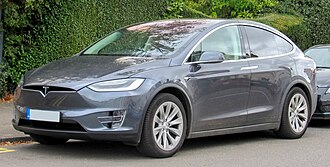
2016 Tesla Model X Common Problems & Defect Telemetry
Authoritative defect intelligence synthesized from 0 verified NHTSA owner complaints, 12 federal safety recalls, and interquartile failure mileage telemetry.
The 2016 Tesla Model X receives a 7.5/10 MazicBay Reliability Index based on 0 verified NHTSA federal complaints and 12 safety recalls. The primary reported failure mode is General Maintenance & Wear with a median failure point at 55,000 miles (IQR: 35,000 – 75,000 mi). Out-of-warranty repairs benchmark at $450–$1,200.
Sales-normalized telemetry
Verified US federal records
Crash, fire & stall audit
12 Active / Free Remedies
Top Reported Problem Clusters (0)
Zero Statistically Significant Problem Clusters
This model year exhibits exceptionally low complaint density across all federal component taxonomies.
Official NHTSA Safety Recalls (12)
SEATS:MID/REAR ASSEMBLY
Summary: Tesla, Inc. (Tesla) is recalling certain 2016-2017 Model X vehicles. The left-side, second row, reclining seat backs may not fully latch due to having incorrectly adjusted recliner mechanism cables. As such, these vehicles fail to comply with the requirements of Federal Motor Vehicle Safety Standard (FMVSS) number 207, "Seating Systems," and 210, "Seat Belt Assembly Anchorages."
PARKING BRAKE
Summary: Tesla, Inc. (Tesla) is recalling certain 2016 Model S and Model X vehicles. The electric parking brake calipers have an internal gear that may be improperly manufactured, possibly resulting in the gear fracturing during parking brake application or release.
SEATS:MID/REAR ASSEMBLY
Summary: Tesla Motors, Inc. (Tesla) is recalling certain model year 2016 Model X vehicles manufactured September 29, 2015, to March 30, 2016. In the affected vehicles, the third row seat back may move forward under load such as in a frontal collision. As such, the vehicles do not conform to Federal Motor Vehicle Safety Standard (FMVSS) number 207, "Seating Systems."
ELECTRICAL SYSTEM:ADAS:AUTONOMOUS/SELF DRIVING:SOFTWARE
Summary: Tesla, Inc. (Tesla) is recalling certain 2016-2022 Model S and Model X, 2017-2022 Model 3, and 2020-2022 Model Y vehicles. The "rolling stop" functionality available as part of the Full Self-Driving (Beta) software may allow the vehicle to travel through an all-way stop intersection without first coming to a stop.
BACK OVER PREVENTION:SOFTWARE
Summary: Tesla, Inc. (Tesla) is recalling certain 2012-2018 Tesla Model S and 2016-2018 Model X vehicles with a center display equipped with a NVIDIA Tegra 3 processor and an 8GB eMMC NAND flash memory device. When the 8GB eMMC NAND flash memory device for the center display reaches lifetime wear, the eMMC controller will no longer be able to maintain the integrity of the filesystem, causing a failure in some of the center display functions.
STEERING:ELECTRIC POWER ASSIST SYSTEM
Summary: Tesla, Inc. (Tesla) is recalling certain 2015-2016 Model X vehicles. The aluminum bolts that attach the power steering gear assist motor to the gear housing may corrode and fracture causing a reduction or complete loss of power steering assist.
STRUCTURE:BODY
Summary: Tesla, Inc. (Tesla) is recalling certain 2016 Model X vehicles. The front and spine cosmetic roof trim may have been adhered to the vehicle without first using primer. As a result, one or both pieces of trim may separate from the vehicle while moving.
STEERING:AUTOMATED/ADAPTIVE STEERING
Summary: Tesla, Inc. (Tesla) is recalling certain 2016-2023 Model S, Model X, 2017-2023 Model 3, and 2020-2023 Model Y vehicles equipped with Full Self-Driving Beta (FSD Beta) software or pending installation. The FSD Beta system may allow the vehicle to act unsafe around intersections, such as traveling straight through an intersection while in a turn-only lane, entering a stop sign-controlled intersection without coming to a complete stop, or proceeding into an intersection during a steady yellow traffic signal without due caution. In addition, the system may respond insufficiently to changes in posted speed limits or not adequately account for the driver's adjustment of the vehicle's speed to exceed posted speed limits.
ELECTRICAL SYSTEM:ADAS:AUTONOMOUS/SELF DRIVING:SOFTWARE
Summary: Tesla, Inc. (Tesla) is recalling 2012-2023 Model S, 2016-2023 Model X, 2017-2023 Model 3, and 2020-2023 Model Y vehicles equipped with all versions of Autosteer leading up to the version(s) that contains the recall remedy. In certain circumstances when Autosteer is engaged, the prominence and scope of the feature's controls may not be sufficient to prevent driver misuse of the SAE Level 2 advanced driver-assistance feature.
ELECTRICAL SYSTEM: INSTRUMENT CLUSTER/PANEL
Summary: Tesla, Inc. (Tesla) is recalling certain 2012-2023 Model S, 2016-2024 Model X, 2017-2023 Model 3, 2019-2024 Model Y, and 2024 Cybertruck vehicles. An incorrect font size is displayed on the instrument panel for the Brake, Park, and Antilock Brake System (ABS) warning lights. As such, these vehicles fail to comply with the requirements of Federal Motor Vehicle Safety Standard number 105, "Hydraulic and Electric Brake Systems" and 135, "Light Vehicle Brake Systems."
SEAT BELTS:FRONT:WARNING LIGHT/DEVICES
Summary: Tesla, Inc. (Tesla) is recalling certain 2012-2024 Model S, 2015-2024 Model X, 2017-2023 Model 3, and 2020-2023 Model Y vehicles. In the event of an unbelted driver, the seat belt warning light and audible chime may not activate as intended. As such, these vehicles fail to comply with the requirements of Federal Motor Vehicle Safety Standard number 208, "Occupant Crash Protection."
STRUCTURE:BODY
Summary: Tesla, Inc. (Tesla) is recalling certain 2016 Model X vehicles. The front and center roof cosmetic trim pieces may be adhered to the vehicle without primer. As a result, one or both pieces of trim may separate from the vehicle.
Pre-Purchase Inspection Checklist for 2016 Tesla Model X
Before purchasing a used 2016 Tesla Model X, perform the following targeted inspections based on reported federal defect patterns:
Scan the OBD-II port under the dash for pending freeze-frame codes (e.g. P0300 misfires, P0087 fuel rail pressure, P0420 catalytic efficiency).
Test vehicle at low-speed stop-and-go and highway merges. Check for delayed reverse engagement or gear shift shudder between 2nd and 3rd gears.
Verify that all 12 NHTSA safety recall campaigns have been performed by an authorized dealership using the VIN.
Ensure the instrument cluster, center screen, and auxiliary charging ports operate with stable 12.0V–14.4V alternator voltage.
Defect & Reliability Q&A: 2016 Tesla Model X
Is the 2016 Tesla Model X a reliable used car?
The 2016 Tesla Model X earns a 7.5/10 MazicBay Reliability Index based on 0 federal owner reports. Vehicles maintained under factory service schedules exhibit strong longevity past 150,000 miles.
What is the most frequent defect reported on the 2016 Tesla Model X?
The leading complaint category is General Powertrain, with a median failure point around 55,000 miles (IQR: 35,000 – 75,000 mi).
Are there free recall repairs available for the 2016 Tesla Model X?
Yes, the NHTSA records 12 safety recall campaign(s) for this model year. All safety recalls are performed 100% free of charge by authorized franchise dealerships regardless of vehicle warranty status.